
I thought that once I'd finished designing my 2027 weekly planner, I'd be almost done.
I had the illustrations, the weekly pages were looking beautiful, and the cover was coming together. Surely the next step was to upload everything to Amazon and order a copy?
Well, yes. Technically. But there was a bit more to it than that.
If you've been following along, you'll know that I turned the illustrations from my Far North Queensland Adventures calendar into a dated weekly planner. I've already shared where the planner idea came from and how I designed the inside pages.
This time, I want to talk about the less glamorous bit. Getting an illustrated planner ready to become an actual book.
First, what is Amazon KDP?
KDP stands for Kindle Direct Publishing. Despite the name, it isn't only for Kindle books. You can use it to publish printed books too, with Amazon printing copies when people order them.
For someone like me, who wants to make illustrated products without boxes of stock taking over the house, that's the biggest appeal. There is a downside though - you don’t get a lot of money back in your pocket. However, looking at my books as a way for people to find me and my art is how I like to think about it.
Of course, there's a difference between having a design you love and having files that are ready for a printer.
A planner is a book, apparently
My planner is 6 × 9 inches. I'd already decided on that size, but preparing a book means thinking about things that don't always matter when you're making a digital design.
There are page dimensions, margins, bleed and the space needed where the pages are bound together. I discovered some of that the hard way when KDP flagged an inside margin on my monthly pages. I wrote about the design side of that adventure in last week's post.
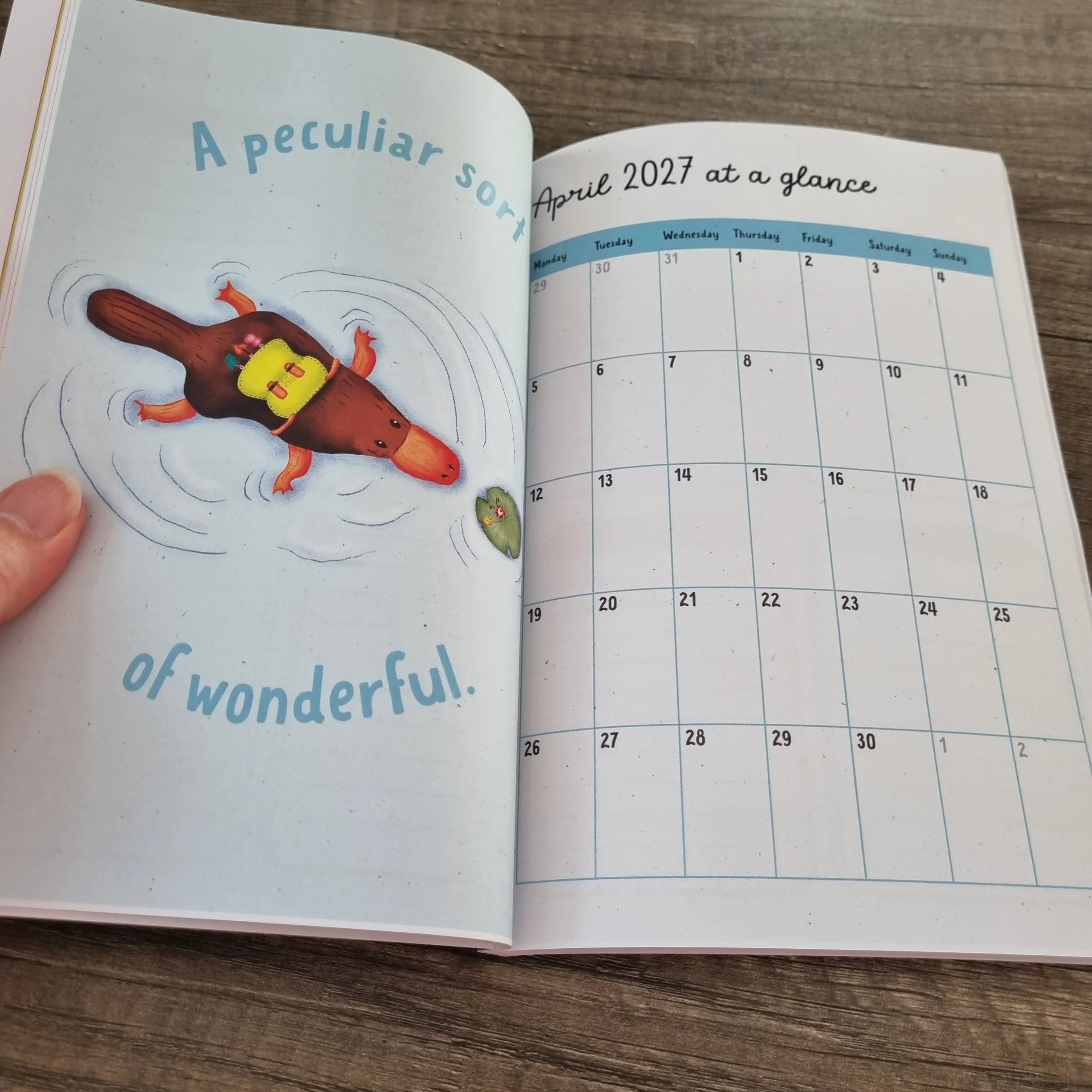
Once I'd made the adjustments, I needed to export the interior correctly. This time I downloaded the individual pages rather than spreads (which I was using in Affinity). A spread looks lovely when you're designing and is very helpful that you can see the two pages together, but the print file needs its pages in the right order.
I also chose a colour interior. That makes the planner more expensive to produce, but the illustrations were the reason I wanted to make it in the first place. It would be a bit sad to spend all that time choosing colours and textures and then not get to enjoy them.
I am still wondering whether to offer a black-and-white version as well. It might give people a less expensive option, but I haven't had any feedback either way, so I'm not rushing into creating another edition.
The cover is a separate job
Finishing the inside doesn't mean you've finished the book. You also need a cover that fits the final print specifications.
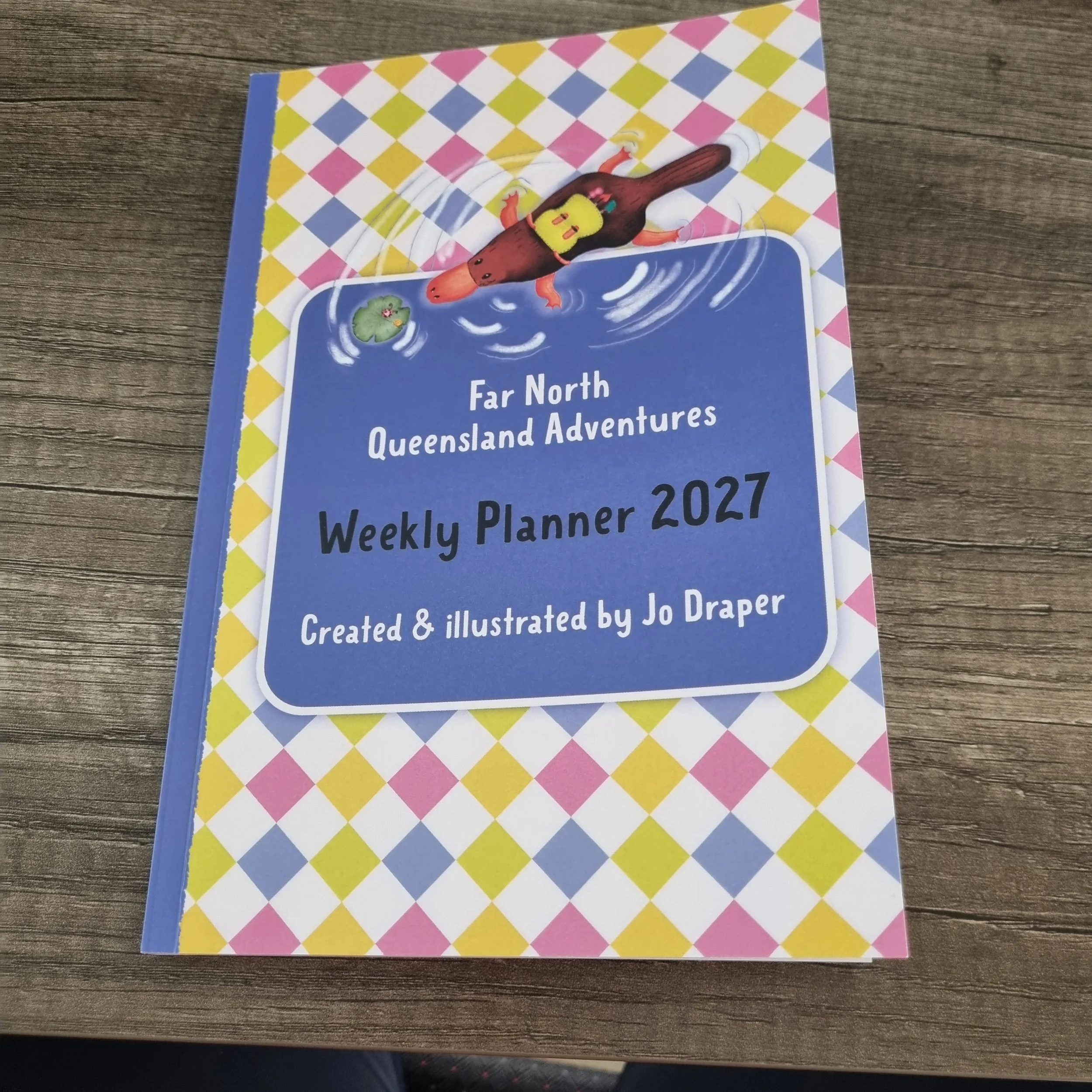
My platypus made it onto the front, with a pattern wrapping around the book, and a little message on the back: 'Drawn with love in Queensland, Australia.'
I love that the finished planner feels like it belongs with the calendar without being exactly the same product.
Once the files were ready, I could upload them to KDP and look at how everything would sit in the printed book. It's one of those stages where you find yourself checking things you were absolutely convinced you'd already checked.
Then you have to tell Amazon what you've made
A finished planner doesn't arrive on Amazon with its own description, so there was more work to do before anyone could find it.
I needed to settle on the title, write a description, choose categories and come up with seven search keywords. It sounds fairly straightforward when you put it like that.
Who knew choosing a category would be so difficult?
You'd think a weekly planner would have an obvious home on Amazon, wouldn't you? Perhaps something called Planners or Diaries, with a nice little box to tick.
Not quite.
I spent far longer than expected clicking through KDP's category options, trying to find somewhere that actually made sense for a dated illustrated planner. There were lots of choices, but finding the right one wasn't nearly as intuitive as I'd imagined. Even with help, we had to work through what Amazon was offering rather than simply choosing the category I'd expected to see.
It's a small part of publishing, but an important one. The category helps Amazon understand where your book belongs, and I wanted people looking for a planner to have a chance of finding mine.
Then there were the seven keyword boxes. That was another moment of putting myself in somebody else's shoes. I know exactly what I've created, but how would someone who's never heard of Far North Queensland Adventures describe it when they're searching?
It's funny how much thinking goes into the bits you don't actually see when you open the finished book.
I called it the Far North Queensland Adventures Dated Weekly Planner 2027. Not the shortest title in the world, but at least it tells you what it is.
I also had to make decisions about the printing and cover finish. These are the little publishing jobs that are easy to forget when you're enjoying the drawing part.
The most important part was opening the parcel
I wasn't going to consider it finished until I'd seen a printed copy.
My Amazon parcel arrived one evening when I was getting ready for bed, so I left the unboxing until the next morning. Naturally, I filmed it. Scruff even joined in with his own commentary.
There is something very different about holding the printed version of something you've spent so long looking at on a screen.
I flicked through the pages, admired the illustrations and looked at the cover. I know I mentioned a little bleed detail when I first opened it, but having lived with the book for a bit, I genuinely love it.
Would I change anything now? No, I don't think I would. That's a rather nice feeling.
The trouble with finishing something you love
You might think I'd be ready to put my feet up after creating a calendar and a planner.
Instead, I'm looking at them and wondering what else I could make.
That's the funny thing about creating products from your own illustrations. Once you see the artwork working somewhere other than your iPad, you start spotting possibilities everywhere.
I don't know yet whether a black-and-white planner will join the collection. For now, I'm happy that I've made a colourful, practical book that I want to use myself in 2027.
If you're thinking about making a book or planner of your own, I hope this gives you a little peek at what happens between finishing the artwork and holding the printed copy. There are a few technical hurdles, but seeing the finished result makes the effort worthwhile.
Come and meet the finished collection
My Far North Queensland Adventures 2027 weekly planner is available on Amazon. If you're more of a wall-calendar person, I've also made an illustrated 2027 calendar, with the same characters having their own little adventures.
Perhaps one of them will come and live on your desk or wall next year.
View the weekly planner on Amazon | See the illustrated calendars

The illustrations and planner pages were finished, but I still had a book to publish. Here's what went into getting my illustrated 2027 weekly planner ready for Amazon KDP, from print files to opening the author copy.